
Ethereum Chain Swap Monitor: Read DEX Events, Routes and Price Estimates
The Ethereum Chain Swap Monitor displays available Ethereum DEX swap observations, pool information, and summary panels. Its scope is Ethereum. It should not be…
Read articleQuietly building useful things
I make and run software end to end — hands-on architecture, Python and Node.js backends, real-time operator dashboards, standalone and web applications, WordPress themes and plugins, on-chain tooling, trading systems, and monitoring. Code is art for me — a creative activity. I design it, write it, and put it where it fits: dedicated servers I run, a Linux VPS, Docker stacks, or the cloud. Then I keep it healthy — debug under real use, smooth what is slow, improve from real data.
How I work
How I approach every project, from a new tool to a production bug fix.
Before writing code I research what the system needs to do: fee mechanics, exchange WebSocket formats, blockchain nonce rules, WP hook execution order, whatever the domain demands. Building on wrong assumptions wastes more time than the research saves. I read specs, trace real traffic, and sometimes write throwaway prototypes to verify a constraint before committing to an architecture.
I start with the smallest version that actually runs and handles real input — one trading pair, one chain, one admin screen. That gives a concrete baseline to measure and a real surface for feedback. Features are added on top of working code, not promised in a spec that never ran under real conditions.
Performance work starts with a profiler, not a hunch. I instrument services with structured logs and metrics from day one, so when latency spikes or memory climbs there is a trace to read rather than a guess to make. Fixes target the measured bottleneck — cache hit rate, query plan, async boundary, or front-end asset size — not the part of the code that looks suspicious.
Capabilities
Web apps, standalone tools, backends, data pipelines, WordPress, blockchain integrations, monitoring, and more. I use whatever the project needs.
I build web applications that run in a browser, standalone operator tools that run locally, and hybrid systems that use both. That includes trading dashboards with live orderbook data, token analytics viewers, service management panels, hardware monitors, and custom tools built for a specific workflow. User interface, data layer, auth, and deployment are all part of the same deliverable.
Python 3 with FastAPI and asyncio is my primary backend stack. I also write Node.js and TypeScript services when the project calls for it — particularly for store backends, real-time pub/sub, or JavaScript-ecosystem integrations. I design REST and WebSocket APIs, background workers, aggregation pipelines, scheduled jobs, and Telegram bot backends. Services are structured to be testable, deployable on a VPS without an orchestration layer, and readable without a guided tour.
A significant part of my work involves live or near-live data: market feeds from exchange WebSocket APIs, on-chain events from Ethereum and other networks, gas price streams, swap monitoring, holder analytics, and transaction decoding. I build the ingestion, normalisation, aggregation, and caching layers, then wire them to dashboards that update in real time. I also write on-chain execution logic — swaps, transfers, nonce and gas management — using Web3.py and related tooling.
Raw event data from an API or a blockchain node arrives in a shape that is rarely directly useful. I design the transformation pipeline: time-bucketed aggregations, rolling windows, ranked lists, ratio calculations, anomaly signals, and structured exports. I use SQLite, PostgreSQL, DuckDB, and in-memory caches depending on the access pattern and hosting constraints. The output is something an operator can act on — not a chart that looks impressive but answers no specific question.
I build WordPress products from scratch: custom themes with no unnecessary dependencies, plugins with clean admin UIs and proper WP hook integration, REST endpoints for JavaScript consumers, and multi-layer caching that does not break on a publish event. I have built and maintain live WordPress plugins that bridge between a WP front end and a private Python or Node.js backend running on a separate server via Cloudflare tunnels.
I manage production Linux servers directly — nginx, systemd, SSL, log rotation, firewall configuration, and git-based deployment pipelines. Performance work starts with a profiler and ends with a verified measurement, not a guess. I also handle application-level security: input validation, rate limiting, brute-force protection, nonce hygiene for on-chain transactions, and secrets management across multi-environment setups.
Applications
A sample of projects with public overview pages. Most of the work lives in private repositories — the public overviews cover what each project does, the architecture decisions behind it, and who it is built for.
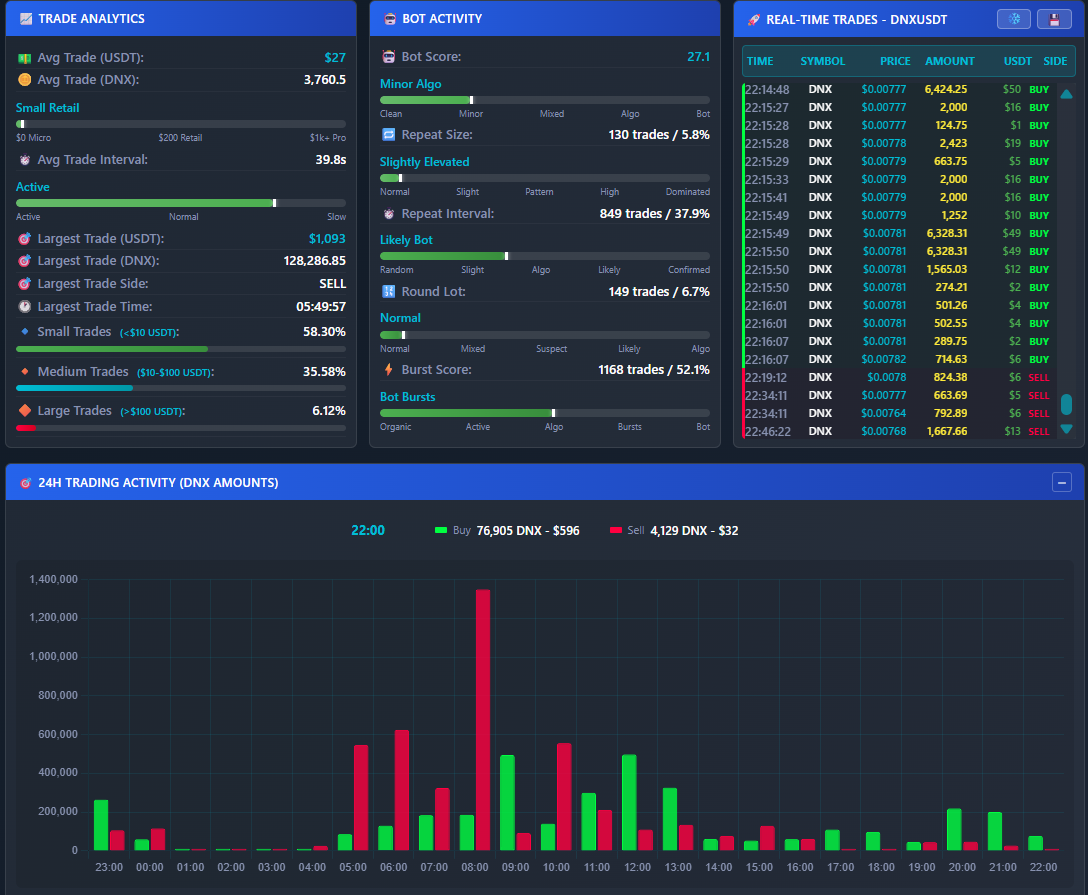
Exchange / Realtime data
LiveBuy/sell volume and per-pair stats from the MEXC exchange, with a live dashboard on this site.
Open app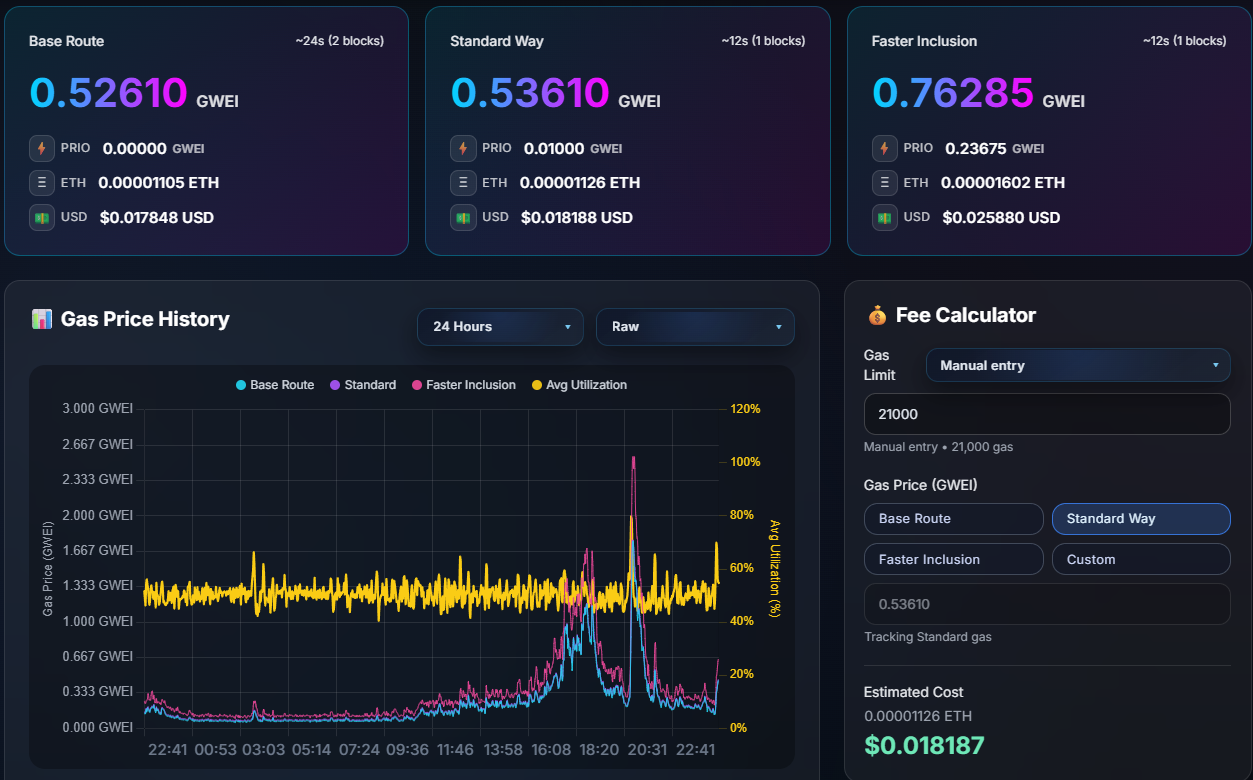
Blockchain / Ethereum
LiveLive Gwei, history charts, and a fee calculator for planning Ethereum transactions.
Open app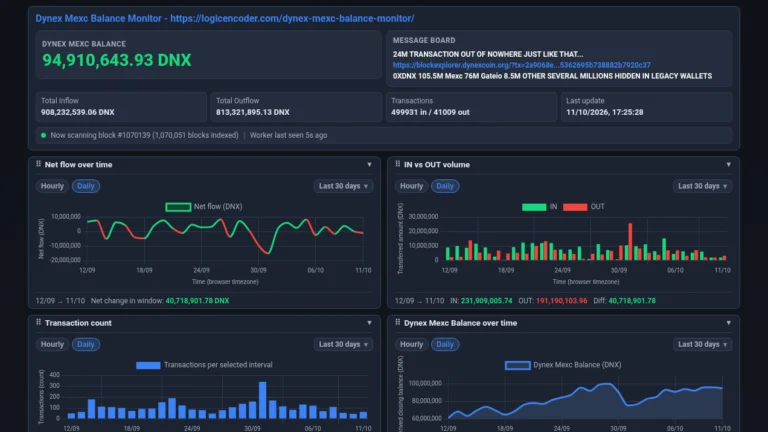
Exchange / Balance monitoring
LiveReal-time balance monitoring for Dynex (DNX) on MEXC exchange.
Open app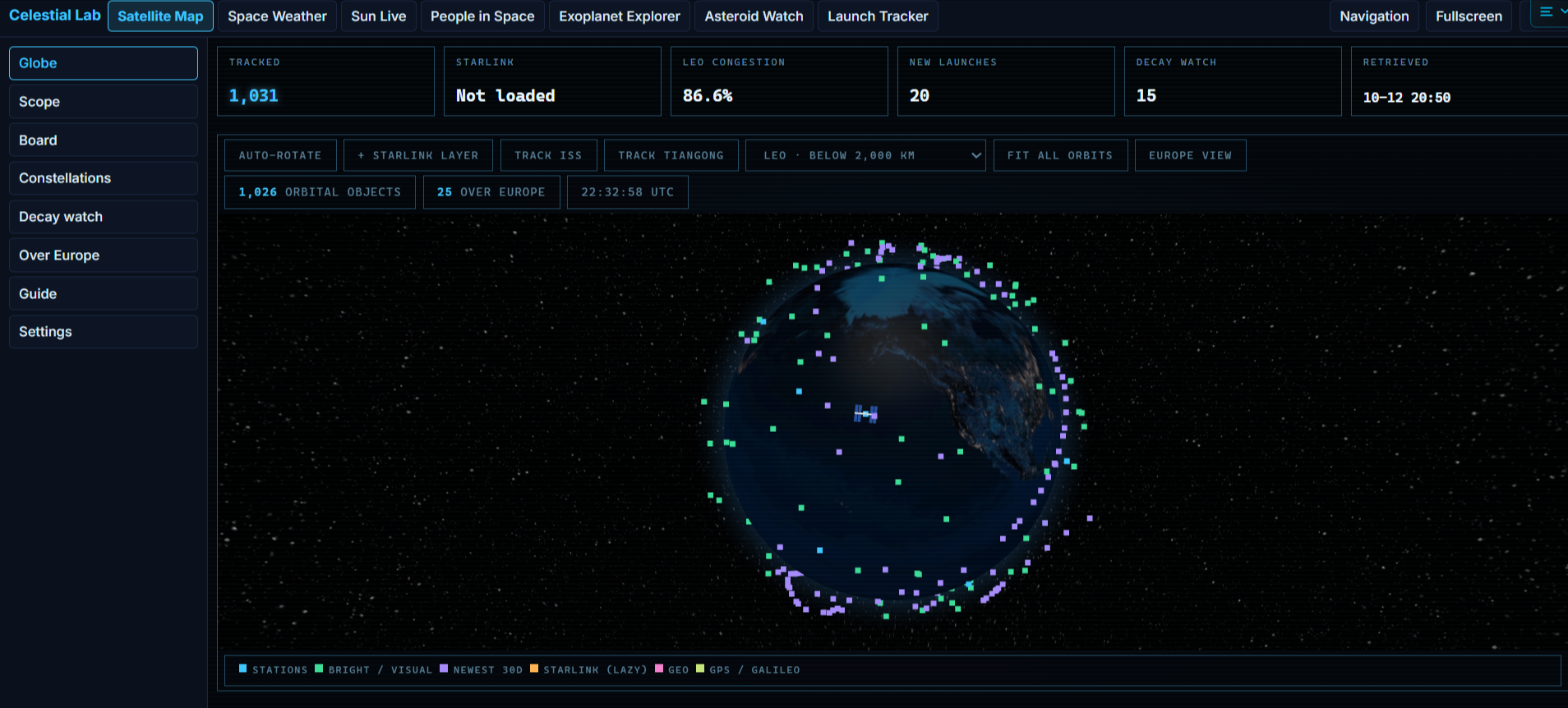
Space / Live observatory
LiveSeven space modules in one full-screen observatory: satellite tracking, space weather, solar imagery, orbital crews, exoplanets, asteroid encounters and launch countdowns.
Open Celestial Lab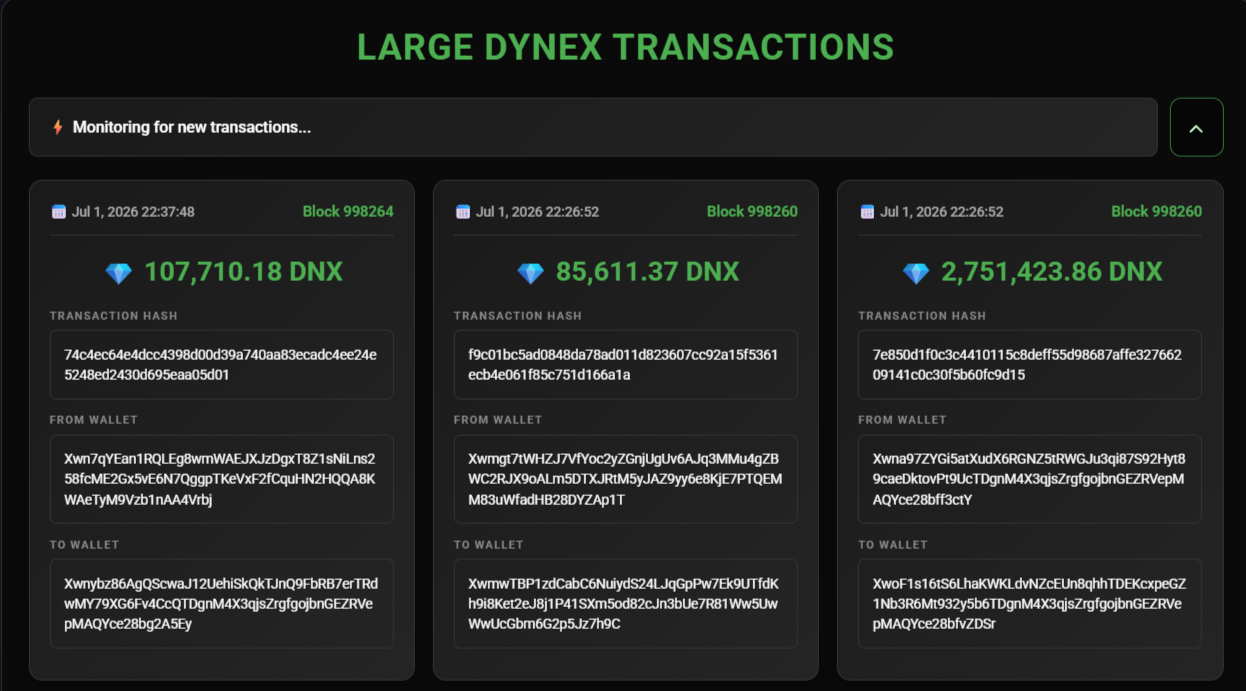
Blockchain / Transaction monitor
LiveLarge Dynex transfers as they hit the chain — threshold filter and decoded fields.
Open app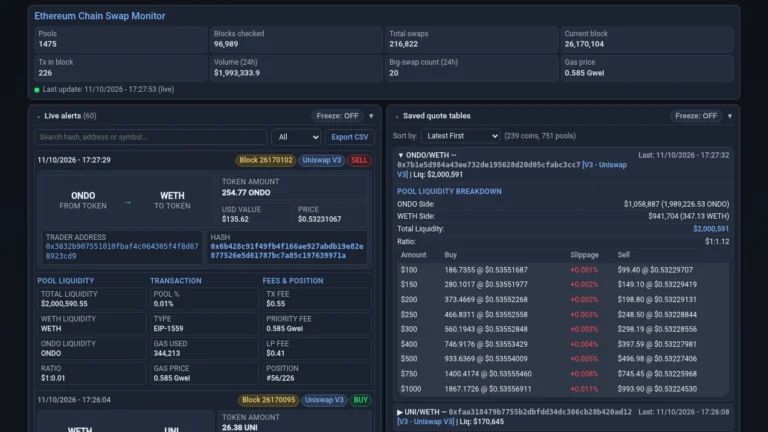
Blockchain / DeFi monitor
LiveLive DEX swap activity across Ethereum pools — volumes, buy/sell pressure, top tokens, and the biggest swaps as they land on-chain.
Open app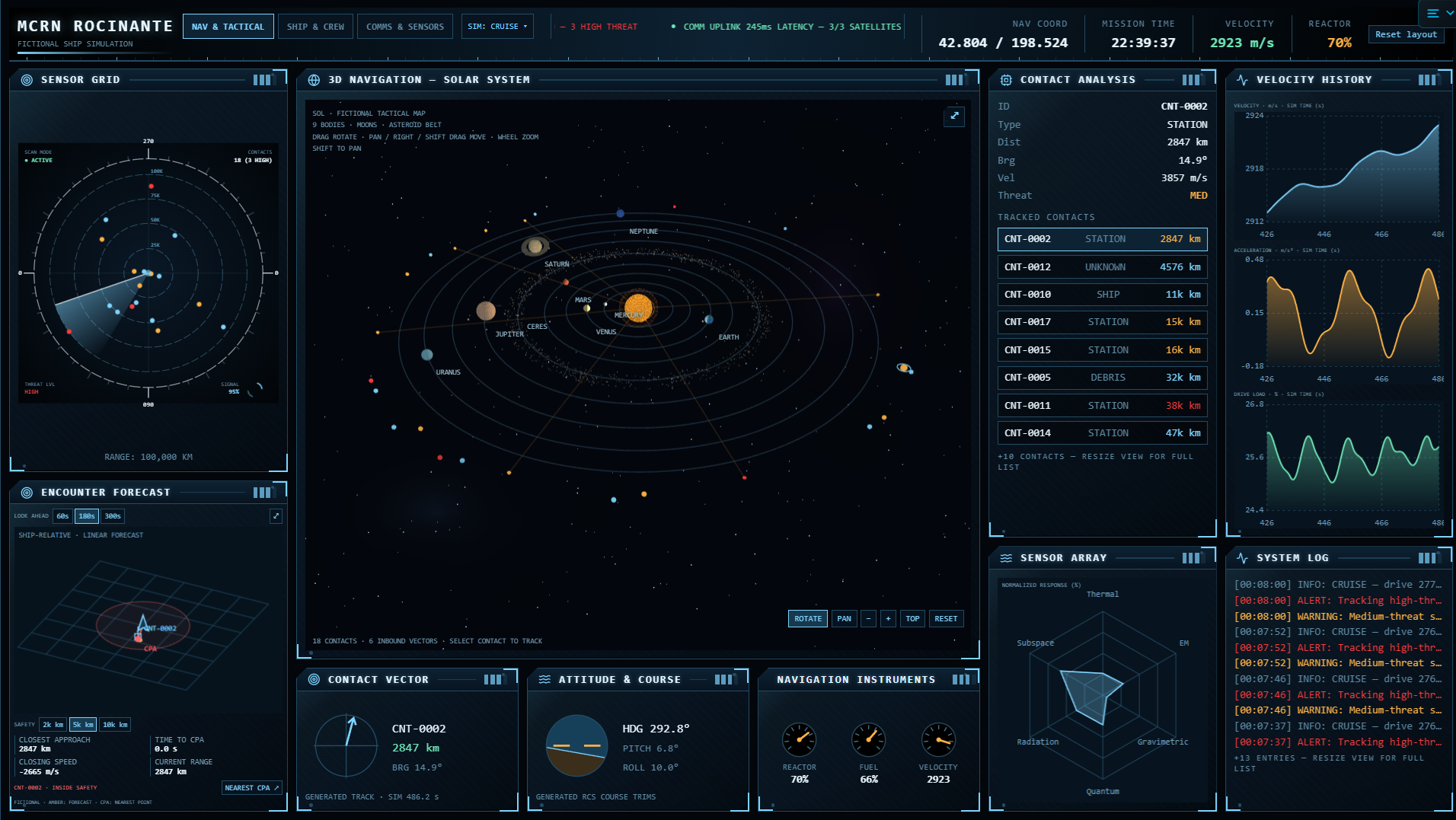
Fictional / Test Simulation
LiveA fictional Rocinante-inspired ship simulator for entertainment and interface testing. Ship telemetry, contacts, crew and sensors use generated simulated data, not real mission observations.
Open app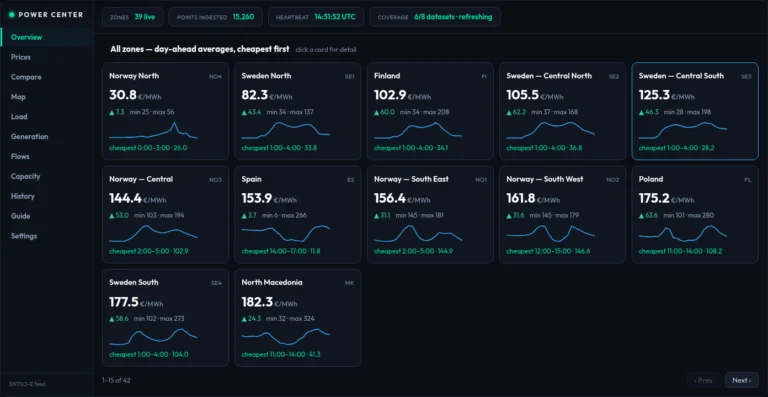
energy
BetaEuropean electricity intelligence — day-ahead prices, load, generation mix and cross-border flows across 40+ bidding zones.
Open app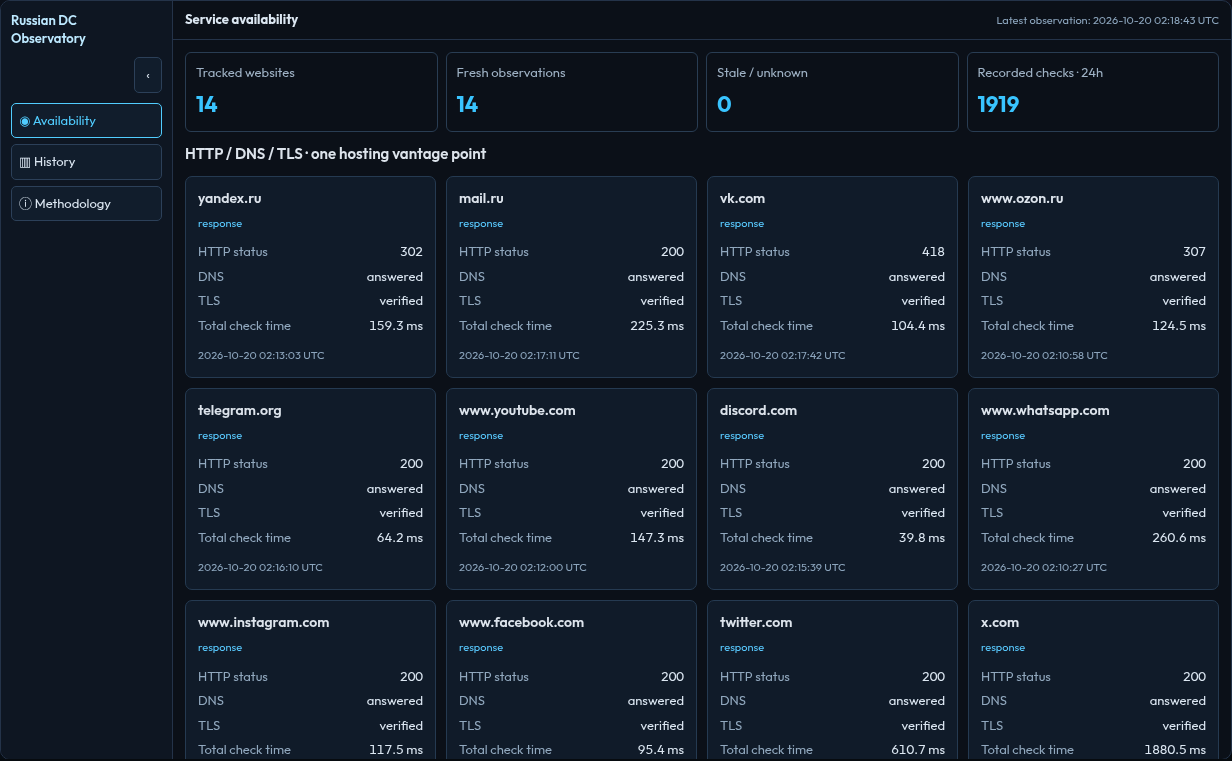
Infrastructure / Availability
BetaHTTP, DNS and TLS observations for 14 services from a remote hosting vantage point. Check durations, timestamps and recorded history; no inferred data-center uptime.
Open observatoryBlog
General technical writing — architecture decisions, engineering problems, tools built to solve specific needs, and observations from running software in production.
The Ethereum Chain Swap Monitor displays available Ethereum DEX swap observations, pool information, and summary panels. Its scope is Ethereum. It should not be…
Read article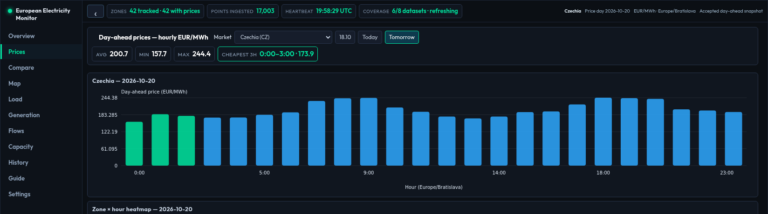
The European Power Prices board makes available day-ahead observations easier to compare across bidding zones. It can help you understand a price curve or…
Read article
Sun Live combines solar imagery with active-region and flare information. Those panels are useful together, but they are not interchangeable observations. A solar image,…
Read articleStack
Technologies I use in production — not a keyword list. Each choice has a reason.
Python 3 with FastAPI and asyncio for APIs, background workers, and data services. Node.js and TypeScript where the ecosystem or project demands it — event-driven store backends, Telegram bot APIs, and JavaScript-first integrations. Both are deployed on bare VPS without container orchestration. I have also worked with Rust for performance-critical tooling and am not afraid to reach outside the comfort zone when the problem demands it.
Operator dashboards and standalone tools are HTML, CSS, and vanilla JavaScript — no build step, instant iteration, easy to debug in a browser developer tools panel. React with Vite where client-side routing, component state, or dynamic document structure make the project genuinely cleaner. PHP and WordPress template system for CMS-driven public sites. TypeScript throughout Node.js projects for contract clarity between layers.
SQLite for single-writer services where ACID guarantees matter and concurrency pressure is low. PostgreSQL with asyncpg for multi-user or high-write workloads. DuckDB for analytical queries over flat files. In-memory caches, pre-aggregated JSON artifacts, and RAM mirrors of chain head data for hot-read paths that cannot afford a round-trip to disk on every request. Storage is chosen by access pattern and hosting cost — not by what is fashionable.
Linux VPS and dedicated servers for production — direct access, systemd, nginx, Cloudflare tunnels. Docker and docker-compose where containerisation makes sense for a project. Cloud deployments where the use case fits. Custom-built monitoring and hardware telemetry dashboards. Everything version-controlled. The deployment approach follows the project requirements, not a fixed doctrine.
About
I design and deliver software projects end-to-end — hands-on architecture and craft, driving production-quality results across Python and Node.js backends, real-time dashboards, web and standalone applications, WordPress plugins, blockchain tooling, video processing, and the infrastructure underneath. Code is art for me — every shipped project is something that works, holds up under real conditions, and is worth building.
A large part of my work is data-intensive: live market feeds, blockchain event streams, gas price signals, trading analytics, holder distribution monitors, crypto payment pipelines, and aggregation services running continuously on production servers. I also build tools because existing solutions did not fit — a custom service manager that controls every process, Docker stack, and firewall from one browser dashboard; hardware and resource monitors; a GPU-accelerated video transcription and karaoke render pipeline. The common thread: I learn fast, build what the problem needs, and keep it running.
The About page has a full breakdown of skills and how I work. Use Contact to discuss a project, a collaboration, or a technical problem.
Read moreI take on custom development work — greenfield tools, extensions to existing systems, backend services, data integrations, WordPress plugins, performance work, or ongoing technical support. The blog covers real production problems and how they were solved. If you have a concrete problem, reach out.